
The Sustainable Development Goals (SDGs) constitute a comprehensive global framework established by the United Nations to advance balanced and inclusive development across economic, social, and environmental dimensions. These goals are designed to promote social justice, eradicate poverty, safeguard the environment, strengthen good governance, and foster peace and institutional resilience.
In recognition of its academic, educational, and societal responsibilities, the University, through the College of Political Science, is committed to developing and implementing strategic plans, academic programs, workshops, and awareness-raising initiatives that contribute to the promotion of the Sustainable Development Goals and their integration into education, scientific research, and community engagement.
The College further seeks to equip students with the knowledge, analytical capabilities, and policy-oriented skills required to assess public policies, address contemporary development and environmental challenges, and contribute effectively to sustainable development at both national and international levels. This commitment reflects the broader responsibility of higher education institutions to develop qualified human capital capable of supporting sustainable, inclusive, and resilient societies.
As part of its institutional commitment to sustainability, the College endeavors to document, promote, and further develop a range of practices and initiatives related to environmental responsibility and resource efficiency. These areas include the following:
- Energy Resources and Energy Sustainability
The College is committed to documenting and promoting responsible energy practices within its facilities, with particular emphasis on energy efficiency, conservation, and the reduction of environmental impacts. Relevant measures include:
- Highlighting the utilization of renewable energy sources, including solar energy systems, where available, and demonstrating their contribution to reducing dependence on conventional energy sources.
- Developing and disseminating institutional guidelines and policies aimed at rationalizing energy consumption across classrooms, administrative offices, laboratories, and other College facilities.
- Promoting the use of energy-efficient appliances, equipment, and systems in order to reduce electricity consumption and enhance the efficient use of available resources.
- Documenting the use of water recycling systems, efficient irrigation mechanisms, and other environmentally responsible technologies in gardens and green areas, where applicable.
- Water Management and Sustainability
The College recognizes the importance of protecting water resources and promoting their efficient and sustainable use. Accordingly, it supports the implementation and dissemination of water conservation programs, institutional guidelines, and awareness initiatives designed to encourage responsible water consumption among students, faculty members, and staff.
The College also seeks to document the practices, technologies, and procedures adopted to reduce water wastage and enhance the efficient management of water resources throughout its facilities.
- Waste Management
The College is committed to adopting environmentally responsible approaches to waste management in order to minimize waste generation and reduce adverse environmental impacts. Its efforts in this area include:
- Reduction of Paper Consumption: Expanding the use of electronic archiving systems, digital correspondence, and electronic administrative and academic procedures to reduce reliance on printed materials and minimize paper waste.
- Recycling: Documenting the availability of waste-segregation facilities for recyclable materials, including paper, plastic, and glass, where available, and promoting cooperation with relevant external organizations and service providers involved in recycling and material recovery.
- Hazardous Waste Management: Where laboratory or academic activities generate chemical, biological, or other potentially hazardous waste, the College seeks to ensure that appropriate procedures for safe handling, storage, and disposal are documented and implemented in accordance with applicable institutional regulations and environmental standards.
- Sustainable Transportation
The College supports sustainable mobility initiatives designed to reduce carbon emissions associated with transportation and to encourage environmentally responsible travel practices among students and staff. These initiatives include:
- Promotion of Walking: Supporting pedestrian-friendly infrastructure within the university campus, including accessible and safe walkways, while enhancing green spaces and tree coverage to encourage walking as a sustainable means of mobility.
- Collective Transportation: Documenting the availability and use of transportation services for students and employees, including buses and shared transportation systems, as a means of reducing dependence on private vehicles, traffic congestion, and related carbon emissions.
- Environmentally Friendly Transportation: Encouraging the use of bicycles, electric vehicles, and other low-emission transportation options, while supporting the provision of suitable facilities and designated spaces where feasible.
- Environmental Awareness and Behavioral Change: Preparing and disseminating digital awareness materials, posters, and educational campaigns aimed at promoting responsible patterns of consumption and encouraging students and staff to reduce the unnecessary use of energy, water, paper, and other resources.
Through these measures, the College of Political Science seeks to strengthen its institutional contribution to the achievement of the Sustainable Development Goals. Its commitment extends beyond teaching and scientific research to encompass responsible institutional practices, environmental stewardship, resource efficiency, and community awareness.
By integrating sustainability principles into its academic, administrative, and operational activities, the College aims to contribute to the development of a university environment that serves as a practical model for the implementation of sustainable development principles and reflects the broader role of higher education institutions in building a sustainable future.



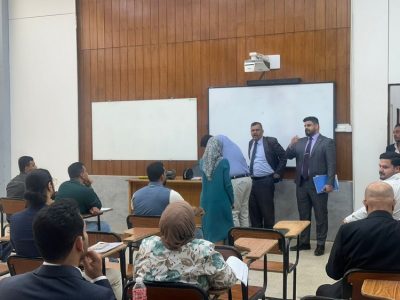
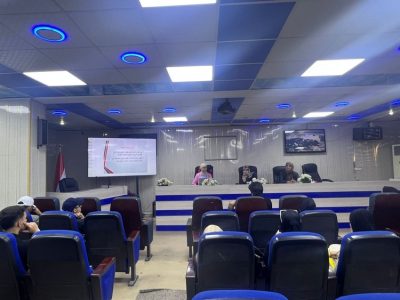
Environment and sustainability activities