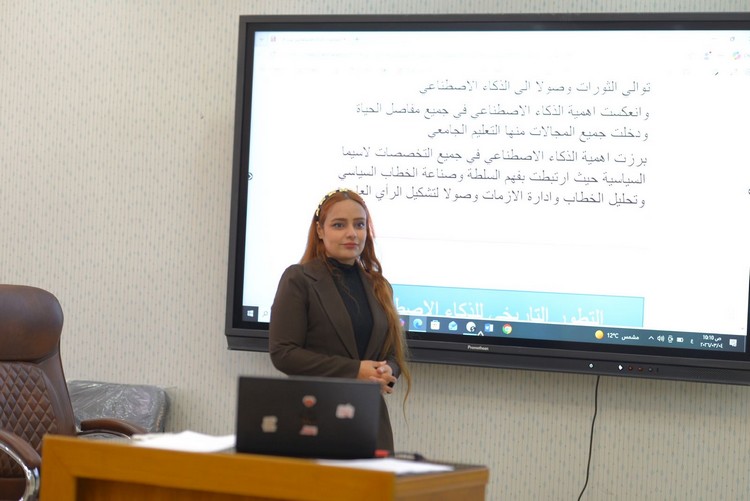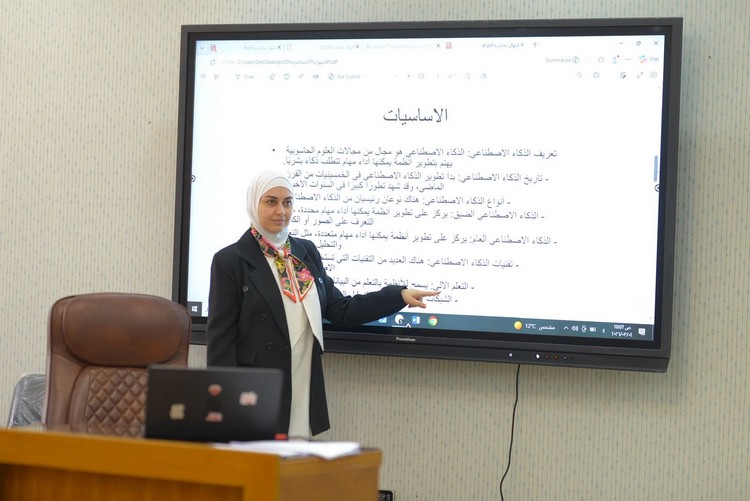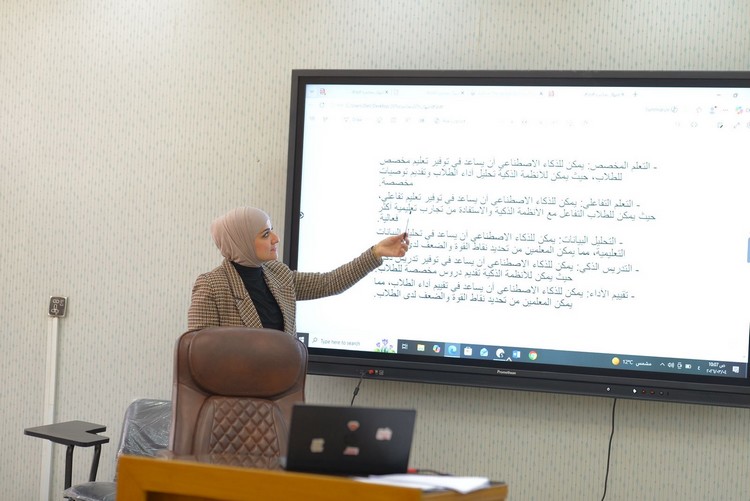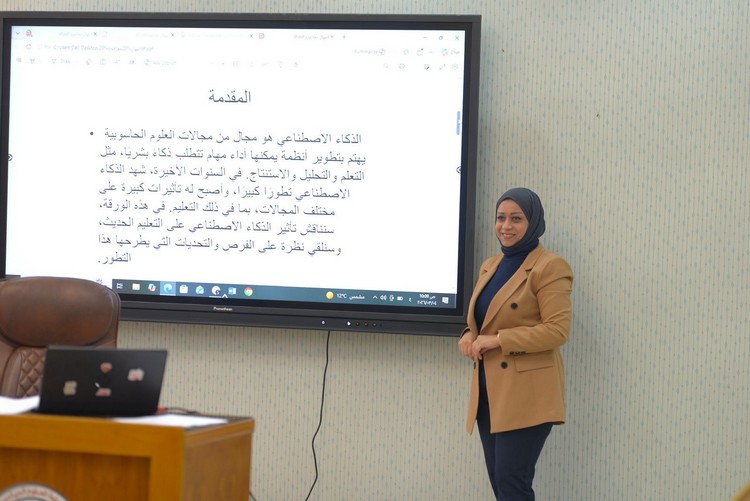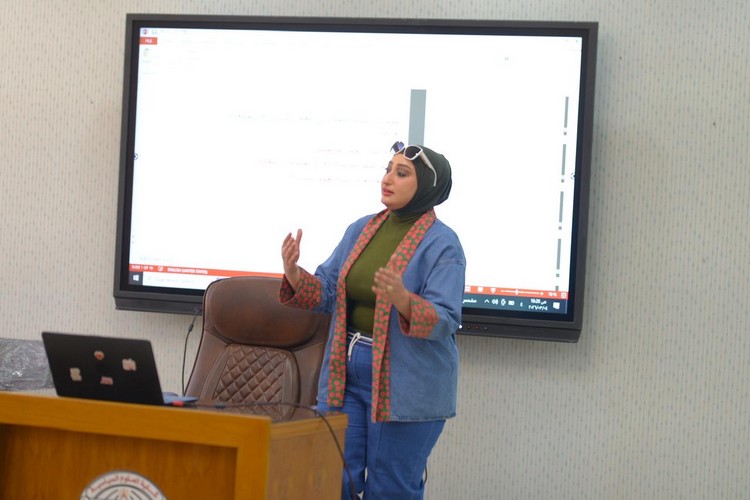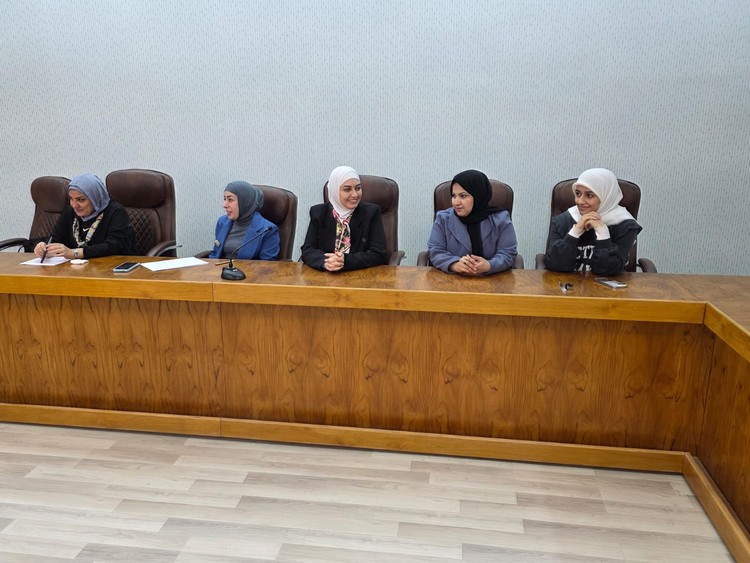
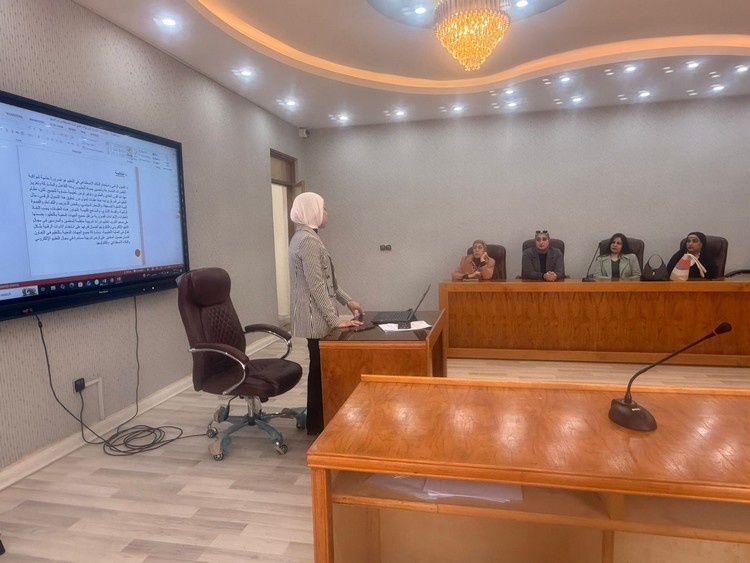
On Thursday, March 16, 2026, the College of Political Science at the University of Baghdad concluded a specialized training course entitled “Artificial Intelligence and its Role in Developing the Educational Process.” The week-long course was attended by a number of administrative and teaching staff members, reflecting the college’s commitment to enhancing digital transformation and improving the efficiency of academic and administrative performance. The course featured a select group of faculty members, each addressing a specific area within the training program. One lecturer discussed the theoretical foundations of artificial intelligence and its applications in higher education, while another focused on employing AI tools in preparing scientific content and designing interactive presentations. A third topic addressed the mechanisms for utilizing smart technologies in student assessment and educational data analysis. An additional topic was dedicated to discussing the ethical and legal aspects related to the use of artificial intelligence in academic institutions. The program included practical sessions and workshops that provided participants with the opportunity to interact directly with a number of digital tools and platforms, contributing to the enhancement of their technical skills and developing their ability to integrate modern technology into the university work environment. The course concluded with a comprehensive evaluation test for the participants, aimed at measuring their level of learning and the achievement of the training objectives. This course aligns with several Sustainable Development Goals, particularly Goal 4 on quality education, Goal 8 on decent work and economic growth, and Goal 9 on industry, innovation, and infrastructure, by supporting digital transformation and building institutional capacity in modern technologies. The course outcomes also intersect with the pillars of Iraq’s National Security Strategy, especially regarding enhancing knowledge security and digital transformation, and building educational institutions capable of keeping pace with rapidly evolving technological challenges. This strengthens the state’s resilience against cyber threats and contributes to developing technically qualified academic and administrative personnel. At the conclusion of the course, the college administration affirmed its commitment to continuing to organize high-quality training programs that keep pace with global technological advancements. This contributes to fostering a culture of innovation, enhancing the quality of education, and improving institutional performance in line with the requirements of comprehensive development.