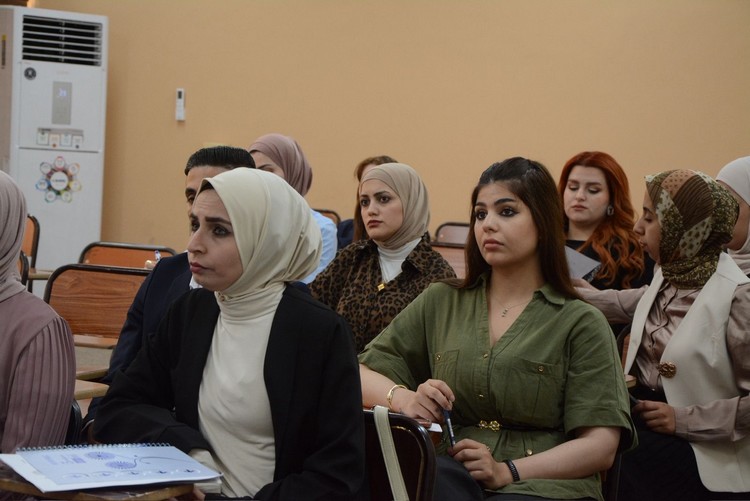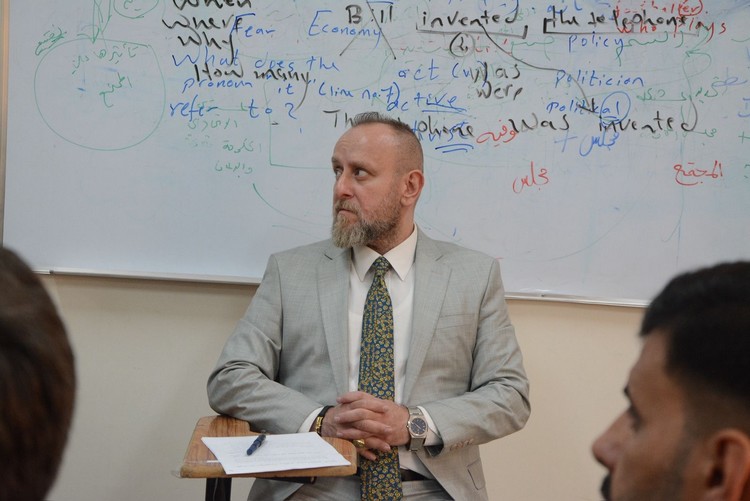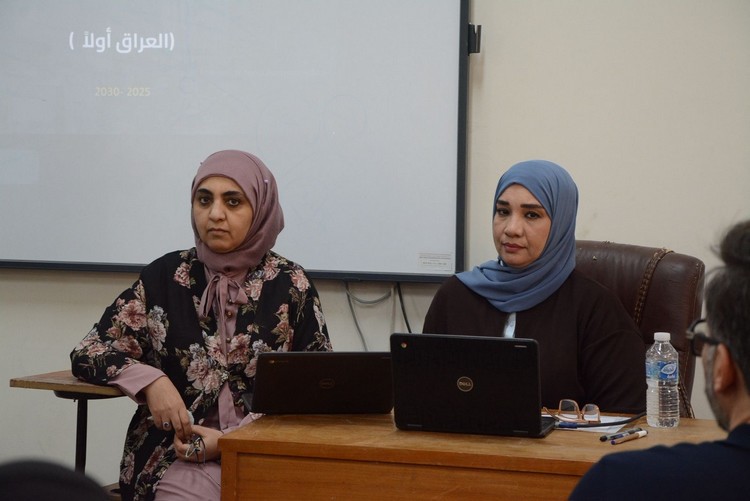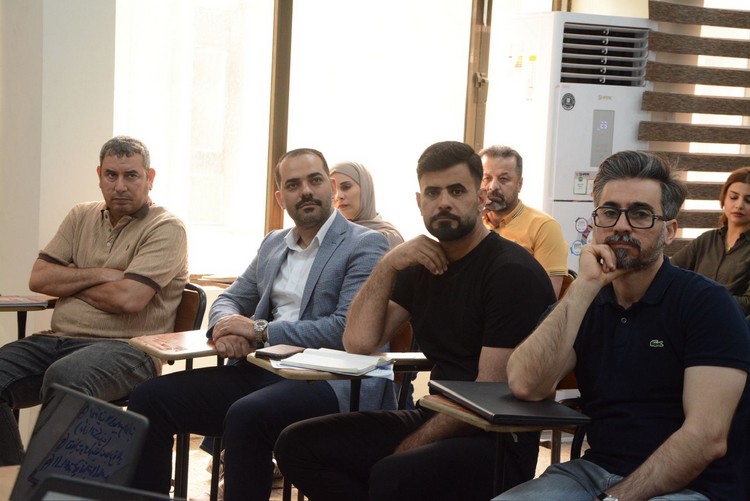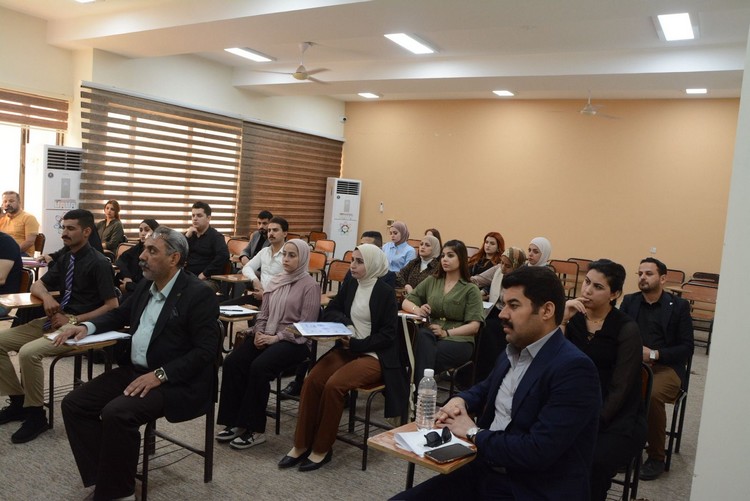
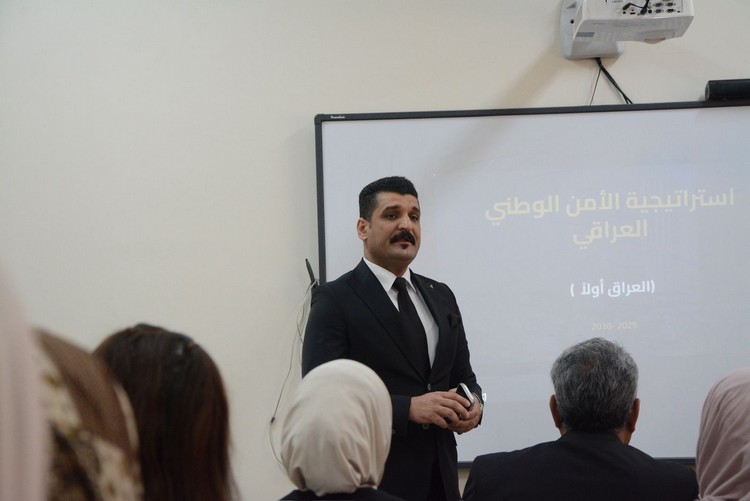
Within the framework of its commitment to the directives of the University of Baghdad and keeping pace with national strategic issues, the College of Political Science at the University of Baghdad organizes, on April 22, 2026, a specialized methodological workshop under the supervision of the committee concerned with following up on the implementation of the Iraqi National Security Strategy (Iraq First 2025–2030), with the participation of postgraduate students (Master’s and PhD).
The workshop is presented by Assistant Professor Dr. Ahmed Al-Mayali, the Assistant Dean for Scientific Affairs at the College, with the participation of a group of the College’s professors. The strategy’s environment and its main objectives are reviewed methodically, shedding light on the most prominent challenges and transformations witnessed by the concepts of national and regional security, as well as clarifying implementation policies and the entities concerned with their application.
The workshop also focuses on guiding students towards research writing related to the pillars of the strategy, emphasizing the importance of utilizing it in preparing Master’s and PhD research projects, especially in light of the shifts in security priorities compared to previous years, and the opportunities it provides for producing modern and non-traditional scientific studies that keep pace with regional and international variables.
In a related context, the workshop emphasizes the importance of aligning the pillars of the strategy with the Sustainable Development Goals, particularly regarding promoting peace, justice, and building strong institutions (Goal 16), as well as supporting partnerships to achieve the goals (Goal 17), in a way that contributes to consolidating societal stability and strengthening the paths of comprehensive development in Iraq.
This workshop comes within the efforts of the College of Political Science to enhance its academic role in analyzing national strategic issues and providing its students with the necessary methodological tools to produce sound scientific research that reflects the ongoing transformations in the international system