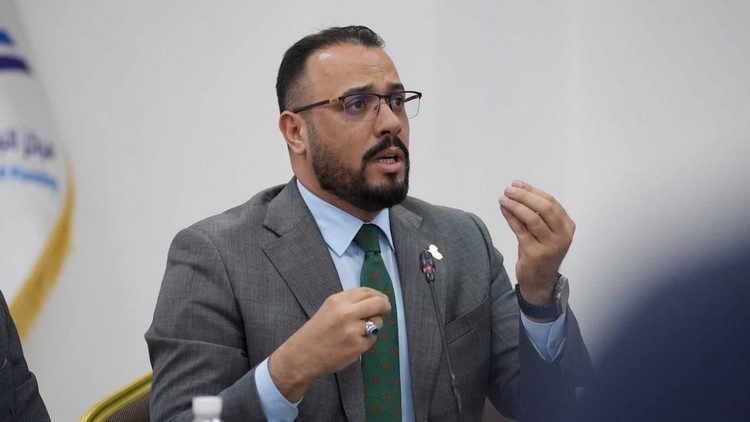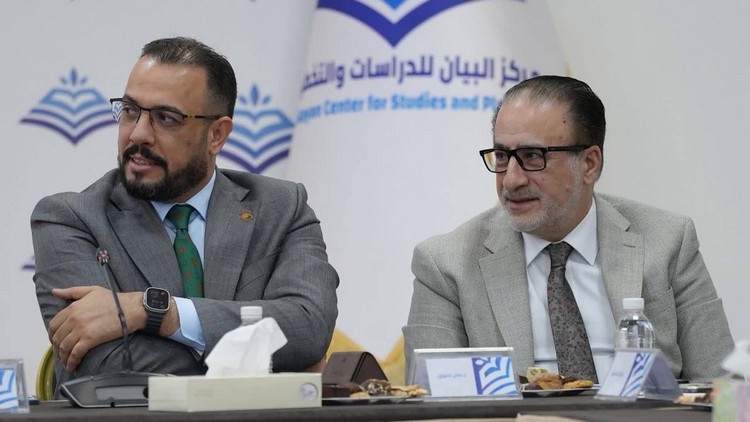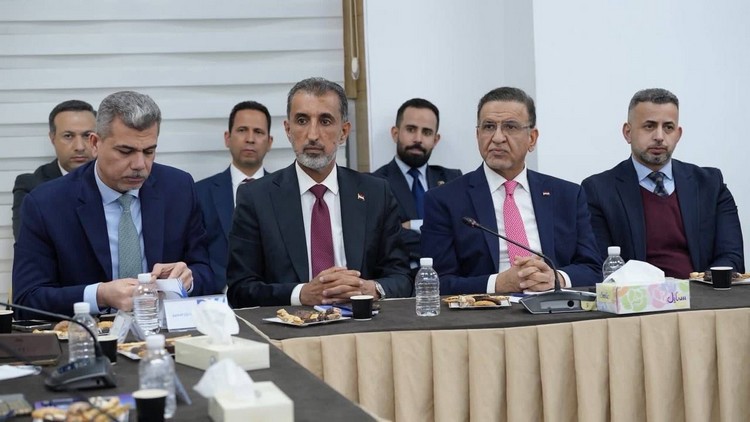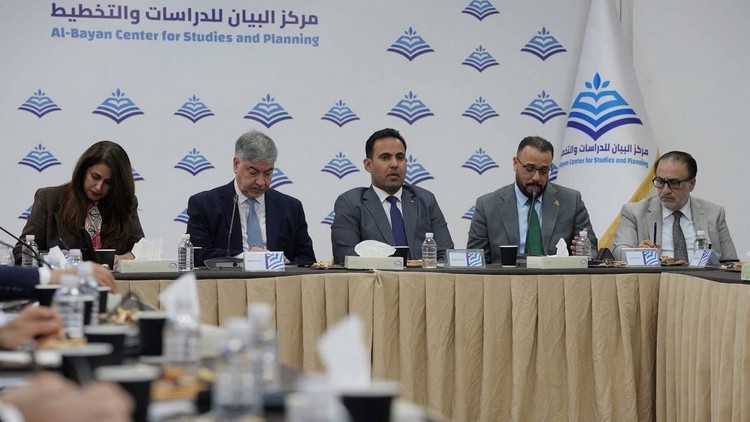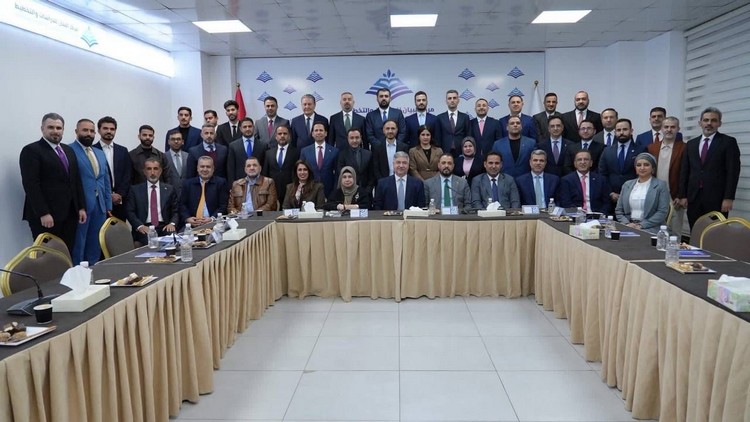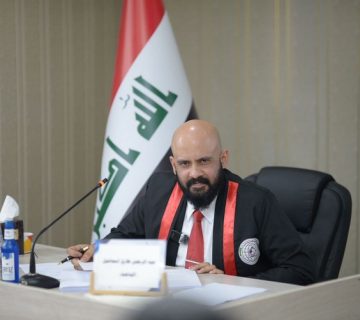
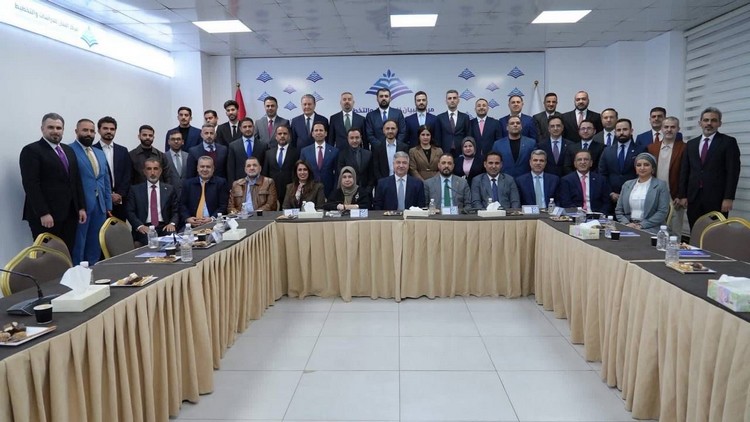
At an official invitation from Al-Bayan Center for Studies and Planning, the Dean of the College of Political Science at the University of Baghdad, Assist. Prof. Dr. Adel Abdul-Hamza Al-Badawi, participated in a high-level diplomatic and academic seminar entitled “Priorities of Foreign Policy in the Upcoming Government: What Should Be Considered in the Ministerial Curriculum and Government Program,” attended by a distinguished group of decision-makers, diplomats, and experts.
Dr. Al-Badawi delivered a keynote intervention alongside Ambassador Dr. Hisham Al-Alawi, Undersecretary of the Iraqi Ministry of Foreign Affairs for Political Planning Affairs, and Ambassador Dr. Mohammed Al-Shammari from the Ministry’s Center, addressing the conceptual framework required for managing Iraqi foreign policy in the forthcoming phase.
The core of the Dean’s intervention focused on advocating the adoption of a governing principle for Iraqi foreign policy under the concept of “Productive Equilibrium,” as a strategic doctrine and guiding principle to regulate Iraq’s regional and international relations. This approach aims to balance national interests with the requirements of stability, away from polarization policies or passive neutrality, while enhancing the state’s ability to transform its geopolitical position into a source of influence and developmental opportunities.
Dr. Al-Badawi emphasized that Productive Equilibrium is consistent with current international transformations and provides Iraqi foreign policy with calculated flexibility based on interests, multiple partnerships, and effective management of interactions with regional and international powers, thereby supporting the country’s political, economic, and security stability.
This proposal directly aligns with the Sustainable Development Goals, particularly Goal 16, which focuses on building strong institutions, promoting peace, and consolidating good governance, as well as Goal 17, related to fostering effective international partnerships. Adopting a balanced and productive foreign policy contributes to attracting international cooperation, supporting development, and strengthening Iraq’s position as a reliable partner in the international system.
The Productive Equilibrium proposal also falls within the pillars of the Iraqi National Security Strategy by linking foreign policy to comprehensive security, enhancing strategic readiness, reducing threat dynamics, and achieving integration among diplomatic, security, and economic tracks, in a manner that preserves state sovereignty and strengthens its capacity to respond to regional and international challenges.
The participation of the Dean of the College of Political Science reflects the active academic presence in major national debates and highlights the role of the university institution in contributing to the formulation of strategic visions that support Iraqi decision-making.